
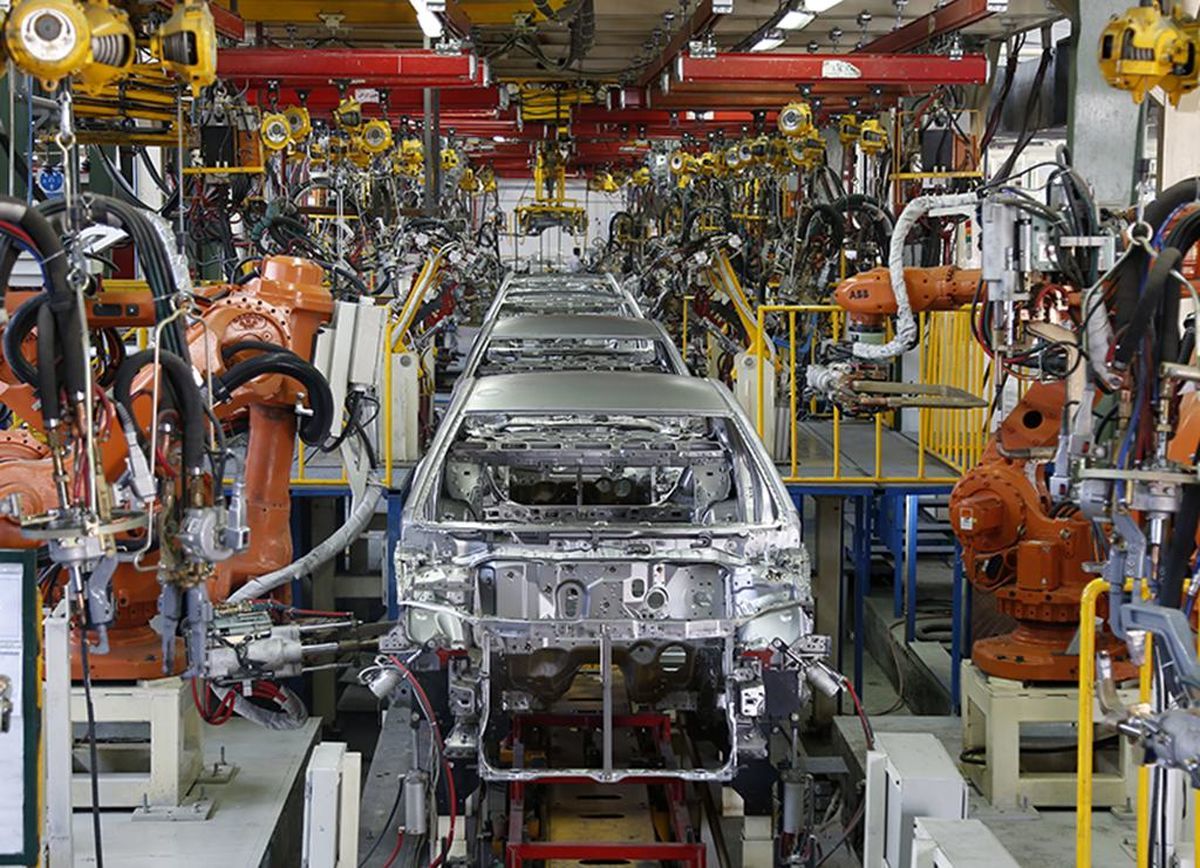
Iran’s automotive industry experienced a dramatic contraction in the first month of the new Iranian year (beginning in March 2026), with production plunging as the effects of recent conflict quickly filtered into industrial supply chains. According to industry data, total passenger car output fell by around 68%, underscoring how geopolitical shocks have disrupted both production planning and access to key inputs.
The downturn reflects a combination of delayed production restarts, weakened supply chains and heightened uncertainty among manufacturers. Following the recent ceasefire in the US–Israel conflict with Iran, auto makers resumed operations later than usual, with production lines restarting about a week after the end of the holiday period. However, the restart was cautious, driven more by risk management than a return to full capacity.
Key Constraint
A key constraint has been disruption in upstream industries such as steel and petrochemicals, which are essential for automotive production. These disruptions have reduced the availability of critical components and complicated supply planning. As a result, manufacturers have been forced to operate at lower utilization levels, prioritizing limited production runs over broader output expansion.
Major domestic carmakers, including Iran Khodro and Saipa, both recorded steep declines in production during the period. Industry-wide output fell to just over 15,000 units, compared with nearly 47,000 units in the same period last year. The gap highlights the scale of the slowdown and the sensitivity of the sector to external shocks.
Iran Khodro, the country’s largest automaker, reported a significant reduction in production compared with the previous year. While the company continued assembling vehicles across its main product lines, output levels were well below historical averages. A notable feature of its operations was the increase in unfinished vehicles, indicating ongoing supply chain bottlenecks. More than 900 incomplete units were reported, reflecting shortages of key components and delayed deliveries.
Saipa, the second-largest manufacturer, also saw a sharp decline in production, with output falling by nearly 90% year-on-year. The company’s performance was affected by similar constraints, including disruptions in parts supply and limited operational continuity in the early weeks of the year. Other domestic producers, including Pars Khodro, also reported significantly lower volumes.
Industry analysts describe the current situation as one of “managed uncertainty,” where companies are maintaining minimal production levels while awaiting greater clarity on supply conditions and policy direction. Instead of returning to full-scale production, automakers have adopted a cautious approach focused on maintaining operations and avoiding deeper financial strain.
Another emerging challenge is the growing stock of incomplete vehicles. The rise in unfinished units suggests that even when assembly lines are active, supply chain disruptions are preventing final delivery. This has increased costs for manufacturers and reduced overall efficiency across the sector.
In recent weeks, there have been early signs of partial stabilization, as companies adjust procurement strategies and attempt to secure more reliable sources of raw materials. However, industry participants caution that these improvements remain fragile and dependent on external conditions, particularly in upstream industries and logistics.
Policy Uncertainty
Policy uncertainty is also playing a key role. Automakers have repeatedly emphasized the need for more predictable pricing frameworks, arguing that rising production costs combined with lower output have squeezed margins. Without adjustments in pricing mechanisms, industry players warn that financial pressure could intensify in the coming months.
Looking ahead, the trajectory of Iran’s auto industry will depend on three key factors: stability in supply chains, clarity in pricing policy and the broader geopolitical environment. While production has resumed, the sector remains far from a full recovery, and current output levels reflect a cautious transition rather than a return to normal conditions.